3 – 4 JUNE 2026
The Meeting Place – Castellana 81, Madrid
Click to view venue details

  • Linkedin
  • Home
  • About
    • Venue
  • Agenda
  • Gallery
  • Speakers
    • Speakers 3
    • Speakers 2
    • Speakers 1
  • Sponsors
    • Sponsorships
  • Register

Posted on04.25.25 | admin | Leave a Comment

Financing Development Projects with New Funding Models.

With the development arena facing a monumental shift due to major budget cuts, industry practitioners are been called to explore other funding models, and blended finance which combines public, private and philanthropic capital in financing sustainable development projects, presents a viable option and great opportunities.

Therefore, if you, your colleagues or company are faced with the uncertainties in the market or are interested in the new approaches in blended finance, then the 3rd Blended Finance Africa 2025 will help you:

  • Simplify the complexities of blended finance as an innovative financing model.
  • Gain actionable insights and increase your capacity in blended finance.
  • Understand how to design and structure blended finance structures effectively.
  • Update your knowledge with the latest trends, approaches and strategies.
  • Discover blended finance projects and investment opportunities.
  • Present your projects and engage in 1-2-1 meetings with investors.
  • Network with your peers and industry stakeholders in key sectors and geographies.
  • Expand your contacts in the blended finance community & impact investing industry.

Joining the BFA 2025 as newly confirmed speakers, we are pleased to announce:

  • Melody Sang, Head of Technical Assistance & Blending, Proparco
  • Alexandre Chausson, Nature-Based Solutions Specialist, WWF
  • Paa Kwesi Awuku-Darko, Inclusive Finance Specialist, WWF
  • Max Ateba, EiR – DTx & RWE Integration, Harvard Innovation Labs
  • Mpho Mhalamvu, Infrastructure Finance Specialist, Development Bank of South Africa
  • Nana Francois, Chief Executive Officer, Opportunity International

In addition, we welcome newly registered executives & companies attending the event:

  • Howard Durling, Senior Adviser Blended Finance, Rabobank
  • Oluwaseun Soyemi, Social Investment Manager, Heritage Fund
  • Alessandra Ribeiro do Nascimento, Economist, BTG Pactual
  • David Kongwa, Global Investment Director, Kordlink Capital
  • Richard Kongwa, Executive Director, Eprox Capital
  • Jamie Gibbon, UK Head of Sales, MontPac
  • Sabrina Mariena, Accountant, NHS

Don’t miss out! Join them today and secure your place. 

Book your delegate pass now to gain all access, the latest market insights and network with the key players. Don’t forget to bring your team!

Download the latest conference agenda for a list of confirmed speakers and key topics.

Please feel free to share this invitation with colleagues that might find it useful to attend.

 

SECURE YOUR PLACE NOW

Don’t miss out! Book online, or by email and join today.

For sponsorship, speaking & exhibition opportunities or more information, please contact:

Emilie Lefevre, Marketing Director

Email: info@alliance54.com
Posted on04.24.24 | admin | Leave a Comment

Delegates List – Companies Attending the BFA 2024

With the Blended Finance Africa 2024 fast approaching, we invite you to register now and join like-minded, forward-looking companies and experts to discuss the key issues investors, businesses face when investing in Africa such as risk factors, lack of bankable project pipelines, limited information on investment opportunities, lack of blended finance skills & innovation, regulatory issues; with focus on key sectors.

WHO IS  ATTENDING?

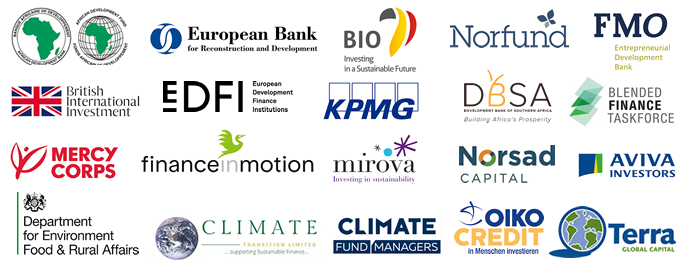
The growing list of companies whose delegates have registered and are attending include:

Blended Finance Taskforce

African Development Bank

World Bank

European Bank for Reconstruction & Development

Development Bank of Southern Africa (DBSA)

Infrastructure Fund

British International Investment

FMO

Norfund

BIO – Belgian Investment Company for Developing Countries

European Development Finance Institutions (EDFI)

Finance in Motion

Mirova

Aviva Investors

KPMG

Norsad Capital

Department for Environment, Food & Rural Affairs (DEFRA)

Oikocredit

Africa Merchant Capital

GCP Infrastructure Investments Limited

GuarantCo

Climate Fund Managers

Terra Global

Climate Transition

Mercy Corps

ODI

Global Social Impact Investments

Click to view the full list of participating companies here

Don’t be left out! 

Register today to be among the 200 industry players and your peers attending the 2nd Blended Finance Africa 2024 taking place on 29th – 30th May 2024 in London, United Kingdom.

Don’t forget to bring your team as well and secure your place as delegates to benefit from the amazing networking, investment and learning experience.

Get Your Tickets Here | | Register Your Interest

Posted on04.15.24 | admin | Leave a Comment

New Speakers & 5Ps of Participants at the 2nd Blended Finance Africa 2024

As more industry players are securing their place for the London gathering to discuss their programmes, priorities, plans and how they match projects with capital to drive profits by blending public or philanthropic resources in order to attract private investments, register now and join the pioneers that aim to move blended finance forward especially in sectors you operate in.

NEW SPEAKERS ANNOUNCEMENT

We are delighted to announce and welcome the following industry experts & speakers:

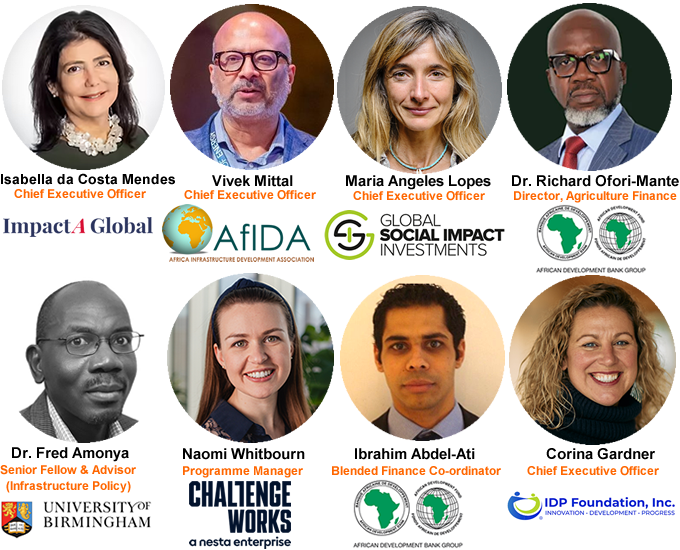
  • Ibrahim Abdel-Ati, Principal Blended Finance Coordinator, African Development Bank Group
  • Dr. Richard Ofori-Mante, Director, Agriculture Finance, Africa Development Bank Group
  • Vivek Mittal, Chief Executive Officer, AfIDA Africa
  • Corina Gardner, Chief Executive Officer, IDP Foundation
  • Maria-Angeles Lopes, Chief Executive Officer, Global Impact Investment
  • Isabella da Costa Mendes, Founding Partner, ImpactA Global
  • Dr. Fred Amonya, Senior Fellow & Advisor (Infrastructure Policy), University of Birmingham
  • Naomi Whitbourn, Programme Manager, Nesta (Challenge Works)

View the Speakers Line-up here

Engage | Learn | Invest – Whether you are managing or launching a fund, currently fund raising, looking to develop new technical or strategic partnerships, investing or have a investment-ready project to present in any of the sectors –

Join 200 industry stakeholders today! Bring your team and benefit from the great opportunities and discounts this event offers. 

Register today to join your peers and attend the 2nd Blended Finance Africa 2024 taking place on 29th – 30th May 2024 in London, United Kingdom.

To secure your place as a delegate and not miss out on this amazing gathering of the industry stakeholders,

Get Your Tickets Here | | Register Your Interest

SPONSORSHIP & EXHIBITION

Very limited opportunities for sponsoring & speaking now exist. If you would like further details on both speaking and participation at the 2nd BFA 2024 conference please contact the following.

For Sponsorship, Project Presentation & Exhibition Opportunities, please contact us

For more information and other enquiries, contact us now

Posted on04.06.24 | admin | Leave a Comment

New Fund Brings Blended Finance Solution to Energy Access in Africa

African Development Bank, Global Environment Facility, Calvert Impact Capital and NDF partner in USD 55 million investment into Off-Grid Energy Access Fund

The African Development Bank’s Board approved a US $30-million investment in the Facility for Energy Inclusion Off-Grid Energy Access Fund (“FEI OGEF”). This follows the approval of additional investments of US $10 million from Calvert Impact Capital (CIC), US $8.5 million from the Global Environment Facility (GEF) and €6 million from the Nordic Development Fund (NDF). In addition, the NDF will provide a €0.5-million grant for technical assistance to support deal structuring and capacity development.

FEI OGEF is a US $100-million blended finance debt fund designed to provide loans in local and hard currencies to off-grid energy companies with the dual objectives of scaling up access to clean electricity for off-grid households and crowding in local financial institutions as co-lenders. The Fund directly supports the Bank’s New Deal on Energy for Africa and is part of its “High 5” priority to light up and power the continent, with an aspirational target of connecting 75 million households through off-grid energy access solutions by 2025. Through the use of clean energy instead of fossil fuels to power communities, the Fund is expected to result in the reduction of up to 8 million tonnes of CO2emissions over its lifetime.

Over 600 million people are estimated to lack access to modern energy in Sub-Saharan Africa.

“FEI OGEF is the first Bank instrument that enables debt financing, including in local currency, to off-grid energy access companies who need growth capital to expand their operations across Africa. The strong collaboration of the Bank, SEFA and NDF in preparing and creating this fund, and the co-investment by the GEF and CIC, demonstrate the power of partnerships for clean energy access in Africa,” said Astrid Manroth, Director, Transformative Energy Partnerships at the African Development Bank.

The combination of these four first investments brings this innovative fund closer to its first close target to be achieved in the first quarter of 2018 and provides a strong signal to the community of interested investors. In particular, the approvals will provides comfort for dedicated private-sector investors to join FEI OGEF.

The Fund is a first mover matching local currency debt instruments with recent innovations in off-grid energy business models to scale up energy access for underserved and rural households. It provides a blended capital structure whereby investments in equity provide comfort and risk cushioning to attract early participation and additional investment by development finance institutions and other commercial investors.

During a recent visit to the Bank headquarters in Abidjan, NDF’s Managing Director Pasi Hellmansaid, “This initiative highlights the close and constructive working relationship between NDF and the AfDB. We have been in lock step throughout the preparation and development cycle of the Fund. Now we have a fully packaged investment vehicle to bring to market scaling up proven clean off-grid energy solutions to the energy access challenge on the continent.”

The Fund will be managed by Lion’s Head Global Partners operating out of offices in Nairobi, Lagos and London, with an initial focus on East Africa as well as Côte d’Ivoire, Ghana and Nigeria, and looking to build a strong pipeline of transactions throughout the region. The pioneering Fund will unlock and catalyse financial sector and local currency participation in this growing green finance opportunity.

“The GEF is pleased to be a partner in this innovative blended finance facility which is part of GEF’s strategic priority to “crowd-in” private sector investment to help countries meet their environmental and sustainability goals,” said  Gustavo Fonseca, Director of Programs at the Global Environment Facility.

“OGEF squarely fits within our investment mandate of leveraging public capital at scale to create systemic change in sectors and geographies that have been overlooked by mainstream capital markets. We are excited to work with the AfDB and the other investors to scale this facility and increase access to clean electricity for off-grid households in Africa,” said Jenn Pryce, President and CEO of Calvert Impact Capital.

The Facility for Energy Inclusion (FEI) is the Bank’s flagship initiative for providing long-term finance to small-scale renewable energy access projects, of which FEI OGEF is one of the financing windows. FEI has been developed with grant support from the Bank-hosted Sustainable Energy Fund for Africa (SEFA).

Posted on03.29.24 | admin | Leave a Comment

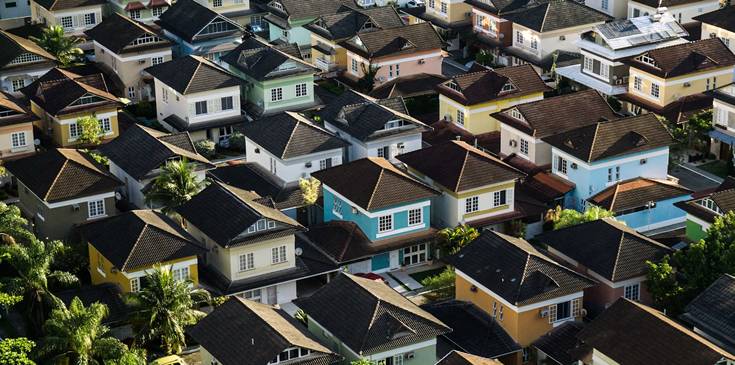
Blended finance and Public Private Partnerships can provide affordable housing in Africa

Blended finance and Public Private Partnerships are powerful tools for unlocking affordable housing and empowering communities in Africa.

Millions of people across Africa lack a safe and secure home, a fundamental human right essential for well-being and dignity. According to the Centre for Affordable Housing Finance, the continent faces a massive housing deficit of over 51 million units, creating hardship and vulnerability for individuals, families, and communities. The countries with the largest housing shortages are Nigeria, with a deficit of 28 million units, the Democratic Republic of Congo, with a deficit of 3.9 million units, and South Africa, with a deficit of 3.7 million units. From the bustling slums of Lagos, where an estimated 66 per cent of the population lives in informal settlements, to the sprawling shantytowns of Kibera, the largest urban slum in Africa with over 250,000 residents, inadequate housing isn’t just a physical problem; it’s a profound violation of human rights.

The continent’s huge demand for housing is compounded by a lack of affordable and adequate supply. Some of the main challenges are the lack of affordable housing finance, high costs of urban land and construction, weak land tenure security, and the prevalence of slums. These challenges have negative impacts on the health, safety, and well-being of urban residents, as well as the environment and the economy.

Despite this daunting reality, there is hope in a transformative force: blended finance through public-private partnerships (PPPs) for housing. Simply defined, blended finance is the complementary use of grants and non-grant financing from private and/or public sources to provide financing on terms that would make projects financially viable. It combines the strengths of both sectors: public resources bringing stability and long-term vision, private resources injecting entrepreneurial spirit and market discipline. This fusion results in more sustainable and impactful investments in housing infrastructure.

This potent combination translates to financing models that deliver more effective and lasting investments in infrastructure, paving the way for millions to claim homeownership. According to Oxfam, blended finance has the potential to mobilise up to £2 trillion in additional finance for the Sustainable Development Goals, including Goal 11 on sustainable cities and communities.

Blended finance in action

A new wave of initiatives offers hope in the face of Africa’s housing crisis. These initiatives, through their diverse approaches, exemplify the transformative potential of blended finance to pave the way for a future where secure and dignified housing is a reality for all.

The Kenya Mortgage Refinance Company (KMRC) is a champion of blended finance. KMRC leverages public funds to guarantee lower interest rates for private lenders, effectively opening the door to homeownership for many. This innovative strategy has borne fruit, increasing the supply and demand of housing, transforming lives, and contributing to national development goals. KMRC’s journey is not without obstacles, however. Ensuring the long-term sustainability and scalability of the program, addressing land and infrastructure hurdles, and guaranteeing quality and inclusivity in housing are crucial considerations for their continued success.

In Zambia, Financial Sector Deepening Africa (FSD Africa), a development institution focused on strengthening African financial markets, has partnered with Sofala Capital, a housing finance company. This strategic partnership has enabled Sofala Capital to expand its reach and impact.

Through its subsidiaries, Zambian Home Loans and iBuild Home Loans, Sofala Capital is making significant strides in providing affordable housing solutions. These initiatives are not just about constructing homes; they are about developing sustainable building materials and fostering a self-sustaining housing ecosystem.

Blended finance is also being used to address the housing crisis in West Africa. The International Development Association (IDA), the International Finance Corporation (IFC), and the West African Economic and Monetary Union (UEMOA) have launched a window that combines concessional funding provided by IDA Private Sector Window with financing and guarantee instruments on commercial terms. This initiative aims to bring investment to places that banks and investors have deemed too risky, and it has the potential to unlock the keys to affordable housing across West Africa.

Public-Private Partnerships (PPPs) are playing a significant role in addressing housing deficits in Africa. A prime example of this is the work being done by TAF Africa Global in Sierra Leone and River State, Nigeria.

In Sierra Leone, TAF Africa Global agreed with the Ministry of Lands, Housing and Country Planning to build 5,000 affordable homes. This initiative is not just about constructing homes; it is about developing sustainable building materials and fostering a self-sustaining housing ecosystem.

In River State, Nigeria, TAF Africa Global has developed an estate located in Port Harcourt, the capital and largest city of River State. The property has over one thousand houses including about 600 units of apartments, villas, constructed on 40 hectares of land. This project is another example of how PPPs are being used to address housing deficits and contribute to economic development.

Housing and the human capital dividend in Africa

While initiatives like Kenya’s KMRC and Zambia’s long-term mortgage lending programs demonstrably alleviate Africa’s housing crisis, their impact transcends bricks and mortar. By fostering innovation, skill development, and community well-being, these blended finance ventures unlock broader human capital potential, paving the way for a more prosperous future.

For example, KMRC’s partnership with a local bamboo company show how blended finance is about more than just constructing homes. This collaboration focuses on developing sustainable building materials, fostering a self-sustaining housing ecosystem that goes beyond the physical structures.

Similarly, skill training programs across Africa, such as those offered by Africa Skills Training College and AITF, equip residents with carpentry and masonry skills. These programs empower individuals to contribute to construction and secure future income, thereby strengthening their economic autonomy and contributing to long-term community vitality.

These initiatives invest in human capital. They enhance employability and income potential, improve health and well-being through secure housing, foster social stability through homeownership, and empower economic autonomy through affordable housing options. This multifaceted approach to development is what makes these initiatives so impactful. They build strong, inclusive communities by empowering individuals through secure housing and homeownership. These initiatives are fostering the development of strong, inclusive communities by empowering individuals through secure housing and homeownership.

In the context of Africa’s housing deficit and the need for sustainable development, blended finance and PPs play a pivotal role. They provide secure housing, improving lives and enabling communities to thrive. These strategies aim to achieve “additionality”, a desired outcome where the activities and their results are larger in scale, higher in quality, or occur as a result of the concessional finance provided.

The potential of blended finance and PPPs is vast. By focusing on the human capital aspect of blended finance and PPPs, we can support these initiatives and advocate for relevant policies. The future of Africa hinges not just on secure housing, but also on the empowered individuals residing in it. This underlines the importance of additionality in blended finance and PPPs, as it ensures that these initiatives lead to tangible improvements in the lives of individuals and communities.

By Ebrima Faal, CEO, Development Perspectives UK

Join us to discuss the challenges, opportunities and invest in Affordable Housing/Real Estate Opportunities at Blended Finance Africa in London, UK. Register.

Posted on03.20.24 | admin | Leave a Comment

Bridging Africa’s Climate Finance Gap: The Urgent Need for Blended Finance

Africa’s legendary climate finance gap has been a persistent topic of climate change discussions for as long as most of us can remember. Despite a financing need exceeding $3 trillion by 2030, the continent receives merely about a 10th of its climate finance need, representing less than 5.5% of the total global climate finance. This gap is felt especially keenly in countries like Uganda, which, despite being one of the many African countries committed to Nationally Determined Contributions (NDCs), experiences a distinct lack of climate funding.

Inequity in Climate Finance Distribution

Notably, the distribution of climate finance that Africa does receive is highly uneven. About 60% of all climate financing is concentrated in just 10 countries, and Uganda is not among them. This disparity is in stark contrast to the region’s level of commitment; up to 98% of African countries have ratified their NDCs, and over 80% have submitted updated NDCs, making Africa among the most compliant regions to the NDCs process.

In Uganda, the financing gap is glaringly apparent. Despite ratifying its NDCs and submitting updated commitments, the country receives only about 3.9% of the estimated $28.1 billion it needs to implement its NDCs.

The Imperative for Blended Finance

Addressing the urgency to bridge the financing gap requires a comprehensive understanding of the current financing profile. International public finance dominates, contributing 80 cents for every $1 invested in climate finance across Africa. The private sector contributes 14 cents, with only about 4 cents coming from the national government. This distribution is mirrored in Uganda, where global climate finance flows are significant compared to domestic sources.

The implications are clear. First, Africa, and Uganda in particular, need to increase the share of private sector financing, including from local private sources. Second, attracting these private sources necessitates prioritizing credit support or credit guarantee schemes to de-risk the climate finance landscape. Lastly, there is a need to clearly define the investment opportunity inherent in the NDCs, with only 28% of African countries currently having a well-developed NDC with an associated investment plan.

The Role of Innovative Blended Finance

Blended finance, which combines public and private capital, presents a critical solution to bridge the finance gap. It can help de-risk investments, attract additional private sources, and operationalize costed NDCs with the help of innovative investment plans.

An innovative blended finance tool for operationalizing the NDCs investment plan is being developed. It draws its “innovativeness” from the diverse components that work in complementarity towards de-risking and operationalizing NDCs investments. This includes training for various stakeholders, insurance to cover market risk, enhanced market access for products developed from the NDCs, cash guarantees, and effective traceability and accountability for timely progress monitoring.

Key Takeaways

  1. De-risking involves more than just fiscal resources; it includes training, targeted policies like fiscal incentives, and other elements that lower the risk of investment failure.
  2. The innovative blended finance tool being developed goes beyond a traditional blended finance facility, incorporating multiple components that work together to de-risk and operationalize NDCs investments.
  3. Different stakeholders need to be engaged based on their expertise and comparative advantage to operationalize the tool.
  4. Financing NDCs implementation must target vulnerable groups like youth and the informal sector to be effective.
  5. The innovative blended finance tool is a public good, intended to be implemented by all stakeholders, not the government alone.
  6. The tool is a subset of the entire NDCs investment plan and is applicable to a variety of NDC priority areas as they ascend the hierarchy of national priorities.
  7. Capitalization of cash guarantees and financing different aspects of implementation can draw from both the exchequer, bilateral/multilateral sources, and the private sector.
  8. High interest rates make the majority of cooperatives inaccessible. Addressing these rates calls for actions on two levels: application of cash guarantees to cover repayment defaults and central bank intervention through policy and regulation to bring interest rates down.
  9. The tool being developed is a compendium of recommendations and guidelines, designed to be implemented by the different players needed to achieve de-risked financing for the implementation of the investment plan.
  10. The climate finance unit is developing a strategy to integrate this innovative tool, which is seen as a subset of the entire NDCs investment plan.
  11. The blended finance tool is poised to address not only the initial focus areas – agroforestry, solar dryers, solar irrigation – but also other NDCs priorities as they ascend the hierarchy of national priorities.

In conclusion, bridging Africa’s climate finance gap is an urgent task that demands a multifaceted approach. The innovative use of blended finance provides a promising solution, offering a way to leverage both public and private capital, de-risk investments, and operationalize NDCs.

As we continue to refine and implement this tool, there’s hope that we can catalyze a shift towards a more equitable and sustainable climate finance landscape in Africa.

By Dr. Richard Munang, Head of Global Environment Monitoring Systems and Early Warning for the Environment Unit, UNEP

Posted on09.16.18 | admin | 1 Comment

Hello world!

Welcome to WordPress. This is your first post. Edit or delete it, then start writing!

© 2017 - 2024 Blended Finance Africa. All Rights Reserved

Organised by
The Alliance 54 Ltd